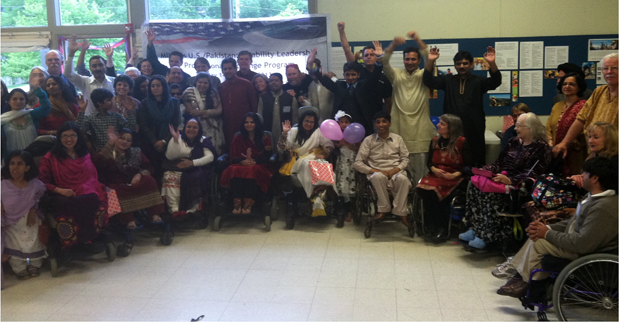
Distribution of Winter Relief Items in Flood Affected Kharko and Qumrah Villages Skardu Baltistan (December 2010)

PROJECT OBJECTIVES

To reduce further sufferings of the most vulnerable flood victims during the winter season through provision of essential winter relief items to 312 individuals in the most flood affected villages, Kharko and Qumrah, Gilgit-Baltistan.

Background: Damage was very heavy in Qumra and Kharko villages of Skardu Baltistan due to the devastating floods in July-August 2010. Qumra is at 25 km and Kharko at 90 km from Skardu main city respectively. Due to mountainous specificities the winter season is always worse in that region. GRACE Association did know the difficult living conditions of vulnerable people caused by flooding. To reduce their further sufferings during the winter season GRACE Association, Pakistan requested the Australian High Commission (AHC) Direct Aid Program (DAP) for support.

PROJECT OUTCOMES

GRACE Association Pakistan and AHC Islamabad have been agreed to implement the project within a month. The organization therefore purchased the approved relief items through quick procurement arrangements. The suppliers supplied the items at GRACE project office in Skardu in two weeks. GRACE Association arranged the winter relief items distribution event in Kharko on December 29, 2010 and in Qumrah on December 31, 2010 and distributed the relief items to the following the most deserving flood victims:

1. Qumrah – 26 men, 27 women,   7 desabled persons,  70 children,  5 infants

2. Kharko  – 40 men, 40 women,   8 desabled persons,  81 children, 11 infants

Total     – 66 men, 67 women, 15 desabled persons, 151 children, 16 infants

GRACE team distributed the winter relief items including 48 Nestle Cerelac packets and sleeping bags for 16 infants, 312 winter shoes (pairs), warmer sweaters and suits, gloves and mufflers for men, women and children including people with disabilities, wheelchairs for 15 persons with physical disabilities including women with physical disabilities, and 39 sleeping kits including 117 mattress and bed sheets in presence and by heads of district administration Ganche Baltistan including the Deputy Commissioner Raja Fazal Khaliq, SSP Syed Ahmad, DSP Mr. Furman Ali, District Health Officer Dr. Sadiq Shah, Notables of the area, Mr. Abdul Kareem, Abdul Ghafoor and Sheikh Taha of Qumra.

The target victims were so happy and expressed their gratitude to the AHC DAP and GRACE Association Pakistan. The Deputy Commissioner Ganche highly appreciated GRACE efforts to help the deserving in needs and requested to expand its services to other villages of the districts like Frano, Surmo, Talis and Basho and Kwardu. Wazir Shamshad Hussain GRACE Program Coordinator thanked the district administration, media and community elders for their cooperation in distribution of the items in the most deserving flood victims and assured keeping on the endeavours in future too.

favicon-32x32

Name of the organization

Grace Association Pakistan

fund-icon

Funds provided by

Australian High Commission Direct Aid Programme (DAP), Islamabad

project-icon

Project

GRACE-DAP Winter Relief Project Skardu Baltistan

time-icon

Project Start/End date

November 20, 2010 / December 31, 2010
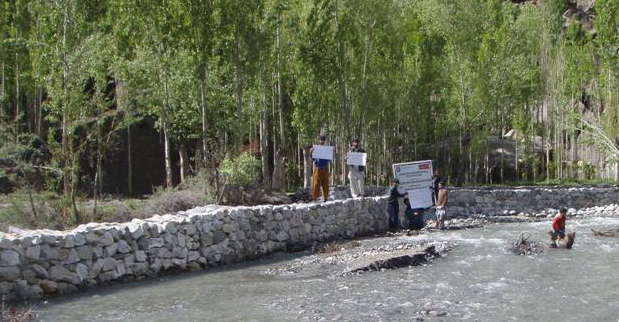
Construction of flood protection wall at Basho Skardu Gilgit-Baltistan, Pakistan ( April 2011)

BACKGROUND

In July and August 2010, Pakistan was hit by heavy rainstorms, devastating floods and landslides, with the Himalayan Karakoram Mountain valleys and Skardu & Ganche districts of Gilgit-Baltistan suffering the Region’s worst deluge in 80 years.

Khar Basho, a village of 700 people in 78 households, located in a hilly area some 53 Km from Skardu city and rich in natural forestation, is one of the worst-affected communities. The principal reason can be found in the nature of the natural ecology of steep and highly erodible mountains, visited annually by seasonal monsoons.

The livelihood of the people in this village is based on livestock farming and other agriculture. The villagers are poor, with each owning a small amount of land in this mountainous terrain. The flooding has destroyed their agriculture assets, and with it, the village infrastructure. The stream, 20 feet wide in August 2010, became a mass of water measuring some 300 feet by 6000 feet long after the deluge, destroying about 25 acres of cultivated land, demolishing hundreds of fruit and forest trees and seriously damaging the local economy.

With the flood steam banks now wider, Basho village communities were afraid that the 2011 monsoon would result in further destruction. For this reason, they appealed to the GRACE Association Pakistan to help them CONSTRUCT A FLOOD PROTECTION WALL.

PROJECT OUTCOMES

Although the villagers’ original request has been for a flood protection wall 12 times as long as the current structure, resource constraints were only able to support 500 feet of construction, installed along the most critical sections of the flood stream bank.

PROJECT IMPLEMENTATION

This project, designed to protect both lives and property, was implemented through full involvement and participation of all beneficiaries. GRACE Association completed the needs identification, assessment, project planning, fundraising, coordination with the support organization (JIPPO), project management, supervision and monitoring during the entire implementation period.

favicon-32x32

Name of the organization

GRACE Association and Anjuman Sub-e-Naveed Basho

fund-icon

Funds provided by

JIPPO Japan, GRACE and the project communities

project-icon

Project

Construction of flood protection wall at Basho

time-icon

Project Start/End date

March 1, 2011 / April 30, 2011

GRIP a community-based model of climate change mitigation (October 2010)

On October 14, 2010, the Pakistan Ministry of the Environment, in collaboration with One UN, provided $1.2 million to fund 24 environmental projects relating to solid waste management and sanitation, community- based natural resource management and grassroots climate change mitigation initiatives.

GRACE Association was one of the 24 awardees out of a nationwide submission total of 450 project proposals. GRACE Association Chief Executive, Mr. Khadim Hussain, received the project award from the Federal Minister for the Environment, Hameed Ullah Jan Afridi. The Grass Roots Initiative Program (GRIP), a joint initiative of the Ministry of the Environment and the UN, aims to support sustainable development projects, connecting policies by government, aid agencies, NGOs, UN agencies and the private sector.

GRACE Association GRIP project aims to implement a community-based model of climate change mitigation through the sustainable use of natural resources at Skardu Baltistan. The project involves a solar pump to raise valuable reserves of subterranean water. This will enable horticulture, fruit and farming enterprises to flourish on what had been sandy and barren land. The project has additionally introduced a non-timber forest product (NTFP) cooking stove, employing local technology and resources. This involves the use of Kore stone which has the capacity to absorb large amounts of heat capable of being released over a period of many hours.

The added value comes by way of creating a tank which will collect water warmed without the need of fuel – an essential commodity for the people in Skardu during the severe winter weather.

The result will be a saving of local forestry, previously used for cooking and heating fuel in winter. Moreover, the project also raises awareness and develops local skills in the sustainable production, collection, processing and marketing of medicinal herbs which grow in profusion throughout the area.

Expected outputs: community mobilization; institutional strengthening of sustainable management of natural resources, and climate change mitigation (CCM).

May 2013 Two weeks US/Pakistan: Disability Leadership Exchange Program – Eugene Oregon

Two weeks US/Pakistan: Disability Leadership Exchange Program – Eugene Oregon May 14 – 28, 2013

Khadim Hussain Chief Executive GRACE Association was invited by Mobility International USA to participate in a two weeks US/Pakistan: Disability Leadership Exchange Program to Eugene Oregon during May 14 – 28, 2013.

Mr. Hussain participated in the program with a dynamic group of men and women professionals with and without disabilities from throughout Pakistan. The delegation included twenty professionals working in fields related to policy and legislation, education, employment, health, disaster relief, emergency response, gender inclusion, advocacy, youth leadership and community development.

The program helped improve knowledge and building leadership skills to strengthen organizations working to empower people with disabilities in Pakistan. The opportunities provided were good to develop new ideas and plans to promote inclusion of people with disabilities in civil society and political leadership; and the program definitely promoted mutual understanding and respect between the people of the United States of America and Pakistan. Many American people had a different view before meeting the delegates but after discussion they learned that Pakistanis are same people as others and they have same understanding, respect for others. The delegates also learned about American Disability Act, and implementation of the act in letter and spirits that type of culture and commitment is yet invisible in Pakistan

During the 14-day program, the delegates had opportunities to experience of physical exercise at Gym, biking, enjoyed the visit to Oregon Coast. The delegates met with U.S. professionals with and without disabilities, including disability rights advocates, educators, community service providers, government officials and international development specialists. All of them were eager to share their expertise and experiences with the delegates. All program activities, workshops and site visits were interactive, practical, and “hands-on” with an opportunity for individual participation and group interaction.

Mr. Hussain appreciates the enthusiasm in the service of human beings especially for people with disabilities and professional expertise and commitments in their jobs.